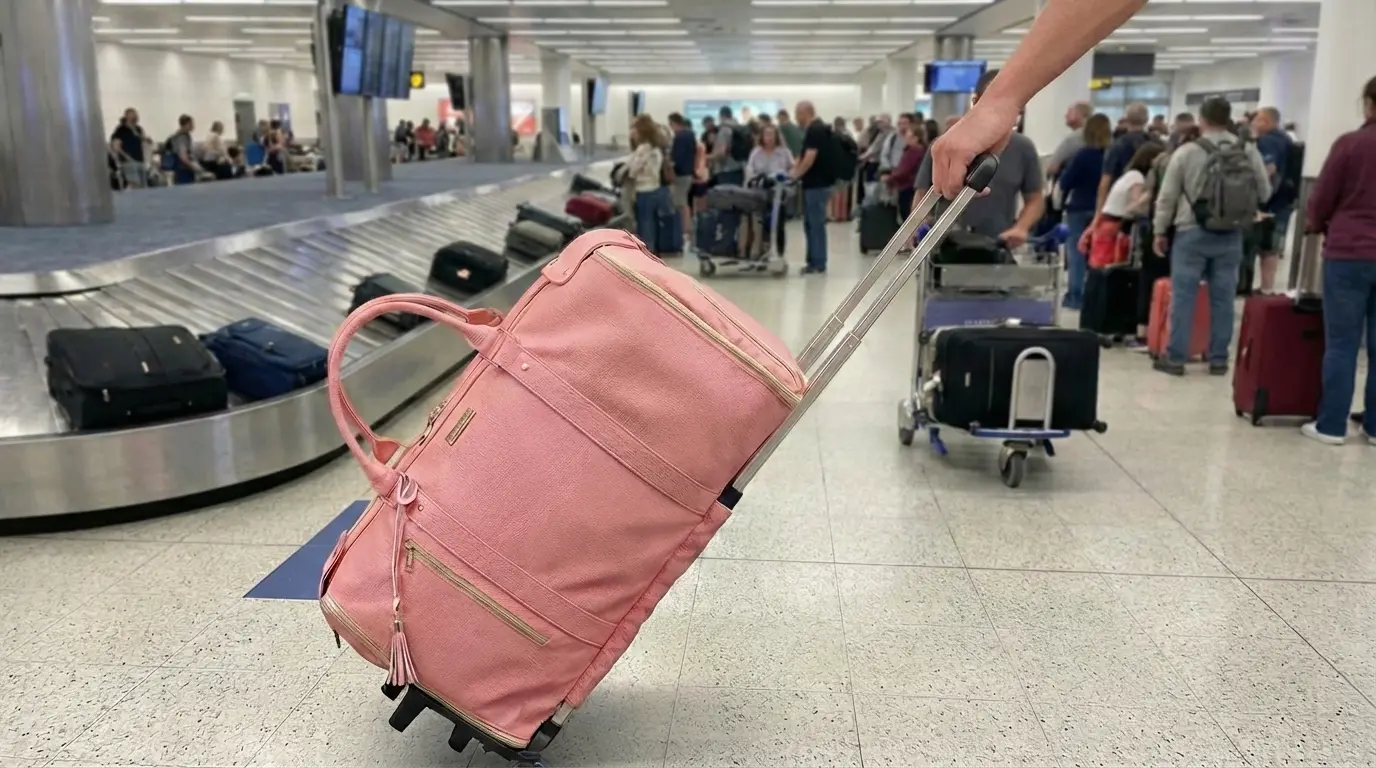
Let me start with an honest confession: I used to be a chronic over-packer. We're talking two full suitcases for a four-day trip. "Just in case" was my mantra, and airline baggage fees were simply a tax I quietly accepted — until I actually added up what I was spending.
In 2024, I paid $548 in checked baggage fees alone. That's before even counting the time I wasted waiting at carousels, the stress of watching bags disappear into airline systems, and the sheer exhaustion of hauling oversized luggage through cobblestone streets in Portugal.
Something had to change. I just didn't know what — or how — until a chance encounter at a Barcelona airport lounge sent me down a rabbit hole that genuinely altered how I travel.
But First — Why Most "Travel Bags" Miss the Point Entirely
If you've spent any time researching carry-on bags, you know the market is flooded with options. Brands claiming "maximum packing capacity," "airline-approved dimensions," and all manner of organizational features. I bought three different bags over two years, each promising to be the last one I'd ever need.
They all had the same problem: they forced me to sacrifice. Either I could bring the clothes I wanted, or my shoes, or my toiletries — never all three without something awkward strapped to the outside or stuffed into an already-full personal item.
"The real problem isn't how much you pack — it's whether your bag is smart enough to hold it all."
Most travelers, I've learned, approach this backwards. We try to pack less to fit the bag. The better question is: can the bag be designed to fit how real people actually travel?
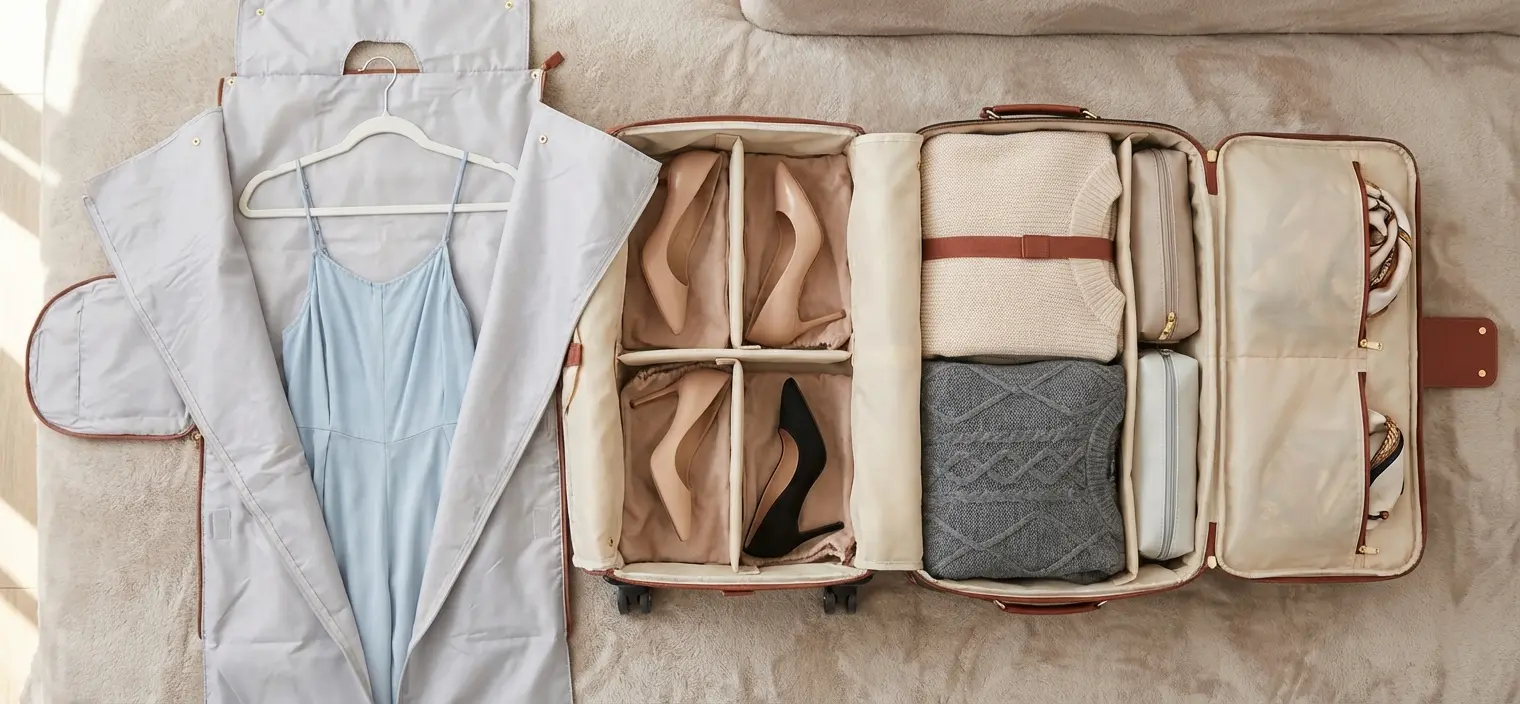
Left: my old checked bag. Right: what I now use for the same trips.
The Woman at Gate B-14 Who Changed My Mind
I was waiting for a delayed flight from Barcelona to Rome when I noticed the woman sitting across from me. She looked completely unbothered — no oversized bag, no stuffed tote, no awkward carry-on wedged between her knees. Just one sleek, structured bag sitting beside her like it weighed nothing.
When she stood to board, I watched her effortlessly slide it into the overhead compartment with room to spare. I couldn't help it — I asked her about it.
She laughed. "I travel forty weeks a year for work. This is the only bag I've kept for more than six months." She mentioned it was the kind of structured carry-on designed with compartments that expand intelligently — a bag that "breathes" with your packing, not against it.
💡 What she described wasn't magic — it was engineering. A bag designed around how travelers actually use space: shoes at the bottom, a dedicated laptop sleeve, compression panels for clothes, and side pockets deep enough to hold a real water bottle without unbalancing the whole thing.
She didn't mention a brand. She didn't have to. I went home that night and started researching.
What I Discovered When I Actually Started Looking
Turns out, there's been a quiet revolution in carry-on bag design — one most travelers don't hear about because the biggest names spend their marketing budgets on influencer posts rather than actual product development.
The bags generating genuine word-of-mouth attention all share a few characteristics that traditional luggage brands have overlooked for decades:
- Compartmentalization that makes sense — dedicated zones for shoes, electronics, and garments so nothing gets crushed against your laptop.
- Expandable capacity within airline limits — subtle gussets that let you fit up to 40L without triggering the dreaded gate-check conversation.
- Weight distribution that doesn't destroy your back — padded back panels with ergonomic carry handles and rolling wheels that actually glide.
- Materials that hold up to real travel — not the fabric that pills and scuffs after three trips, but structured, water-resistant exteriors that look as good on trip fifty as trip one.
- Security features that give peace of mind — lockable zippers, hidden pockets, RFID-blocking compartments for passports and cards.

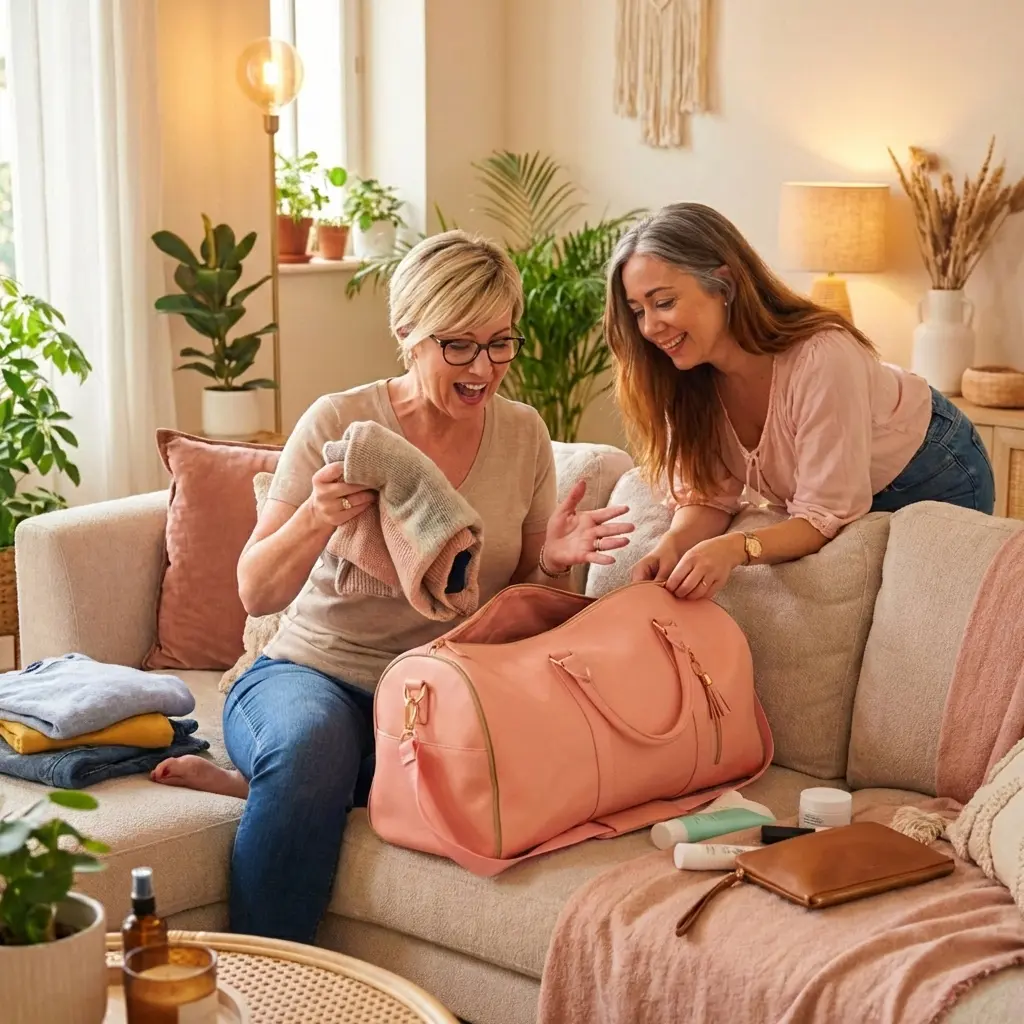
Organization matters. A well-designed carry-on turns packing from a puzzle into a process.
I Tested One for a 10-Day Italy Trip. Here's What Happened.
I'm not someone who makes purchases impulsively. I researched, read reviews, watched unpacking videos, and cross-referenced dimensions against the carry-on policies of six airlines I regularly use.
When the bag I'd been eyeing arrived, my first thought was: it looks smaller than I expected. That fear lasted exactly as long as it took me to start packing.
For a ten-day trip through Florence, Cinque Terre, and Rome — in October, when the weather requires actual layers — I packed:
5 tops · 3 bottoms · 1 dress · 1 light jacket · 2 pairs of shoes · full toiletry kit · laptop & chargers · a light rain jacket · a small crossbody bag
It all fit. With room for the ceramics I bought in Positano.
I stood at the check-in counter fully prepared to be told to check my bag. The agent glanced at it, waved me through, and I nearly cried right there in the terminal. Ten days. Zero baggage fees. One bag.
Why This Type of Bag Has Started Getting Serious Attention
This style of intelligently structured carry-on has been gaining traction in travel communities — not because of advertising, but because people who use them keep recommending them to other travelers. The word-of-mouth feedback loop is real and it's consistent:
People report saving hundreds of dollars annually on checked baggage. They describe getting through airports in half the time. Several travelers mentioned that the organizational system alone reduced their pre-trip stress significantly — knowing exactly where everything is removes an entire category of travel anxiety.
📊 A recent informal survey of frequent travelers found that switching to a single, high-quality carry-on saves the average traveler between $400–$700 per year in baggage fees — not counting the time savings and reduced stress.
The math is straightforward. A quality carry-on that costs $150–$250 pays for itself on the first international round-trip if you'd otherwise be checking a bag. Every trip after that is pure savings.
Is It Really That Simple?
I'll be honest — it took me a few trips to fully trust the one-bag system. The first time I walked past the baggage check-in line felt almost transgressive. Old habits die hard.
But by the third trip, something had shifted. I wasn't just saving money. I was traveling lighter in every sense of the word. Less to manage, less to lose, less to worry about. I arrived places feeling like myself rather than like someone who'd just hauled their entire wardrobe across an ocean.
The bag I ended up with is made by a brand that's been building travel-specific gear for over a decade. Their carry-on consistently ranks at the top of independent travel gear reviews, and after a year of use across nine countries, I understand why.

Premium Structured Carry-On
Airline-approved dimensions · 40L expandable · Built-in TSA lock · Water-resistant shell · Lifetime warranty
As seen in: Travel + Leisure, Condé Nast Traveler
Who This Is Actually For
I want to be clear: this isn't a magic solution for every traveler. If you're moving countries, going on a ski trip, or packing for a family of four, you'll still need checked bags. That's fine.
But if you're a solo traveler, a business traveler, or anyone taking trips of two weeks or less — and you're currently checking a bag out of habit rather than necessity — this style of carry-on is worth a serious look.
The people I've seen get the most out of it tend to be:
- Frequent flyers who are exhausted by the checked-bag process
- Travelers who want to explore cities without storing luggage mid-day
- Anyone who's ever had a bag lost by an airline (a trauma that doesn't fade)
- People who prefer arriving at their destination and immediately going — no waiting, no carousel anxiety
Where to Find It
The brand behind the bag I recommend isn't sold in big-box retail stores. They sell primarily through their own website, which is actually a good sign — it means you're buying direct, with access to their full warranty and customer service, without the markup that comes from retail distribution.
When I last checked, availability had been inconsistent — certain colorways and sizes sell out and restock on irregular schedules. If you've been thinking about upgrading your travel kit, sooner tends to be better than later.
See Full Details & Current Pricing
Opens official product page. Prices and availability may vary.
I was skeptical I could fit everything for my two-week Japan trip into a carry-on. I managed it with space to spare — and saved $190 in baggage fees on that trip alone. The bag paid for itself before I even landed.
As someone who travels for work forty weeks a year, I've tried everything. This is the bag I now recommend to every colleague who asks. The organizational system alone is worth it.
Final Thoughts: The Bag Isn't Magic. The Freedom Is.
I've now taken this carry-on to fourteen countries across three continents. It's been through overhead bins, put in the hold on small regional jets (with the promise it would be waiting at the gate on the other side), dragged across cobblestones, rained on in Edinburgh, and dropped more times than I'd like to admit in Rome.
It looks essentially the same as the day it arrived.
But beyond the durability, beyond the space, beyond the money saved — what this bag gave me was a different relationship with travel itself. I stopped dreading the logistics. I started looking forward to the arrival. Small shift, enormous difference.
If you're still on the fence, I'd say this: try it for one trip. Just one. See how it feels to walk off a plane and straight to wherever you're going, nothing to wait for, nothing to lose, no extra fees, no extra weight.
Then tell me you want to go back.
This article contains affiliate links. Clicking through supports our writing at no cost to you.